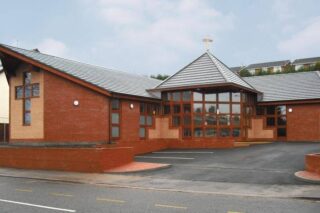
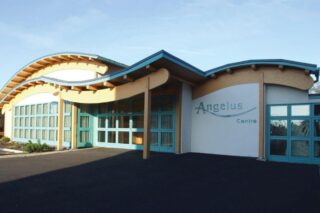
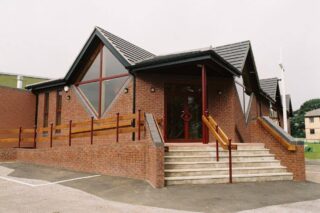
Download the latest brochure(s):
Restaurant for Blundells Hill Golf Club
Client: Blundells Hill Golf Club
Location: Merseyside
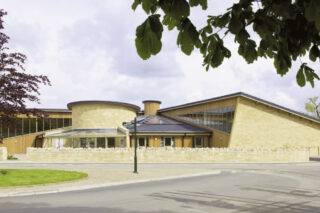
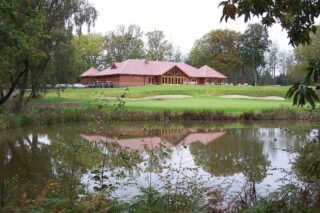
Established in 1994, Blundells Hill Golf Club has, under the guidance of Phil and Steve McKie, grown to become one of the most popular courses in the North West of England. In order to provide additional facilities to members, Phil and Steve planned a 200 square metre clubhouse extension to house a restaurant.
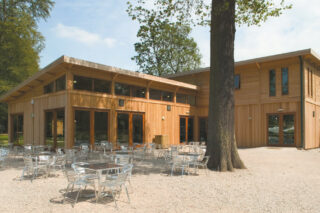
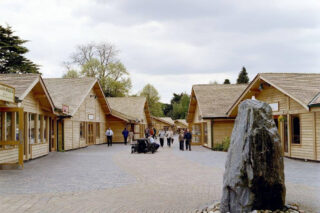
Sketches and quotations from local building contractors were uninspiring and well outside available budget. Steve McKie then turned to Pinelog, as the Bakewell based company had previously designed and built him an indoor swimming pool at his home. He was surprised when Pinelog's architects suggested that he consider a timber building. "I never appreciated that a timber structure of the size we envisaged was possible," he said. "But, having seen examples of Pinelog's architecturally designed leisure buildings, manufactured predominantly from Scandinavian redwood, I realised that a timber structure had much to offer compared to those based on steel and concrete."
Within five months of commencing foundations, the restaurant was fully commissioned and ready to accept its first customers. Pinelog managed every stage of the project from plannng, foundations, manufacture of the timber building, right through to roof tiling.
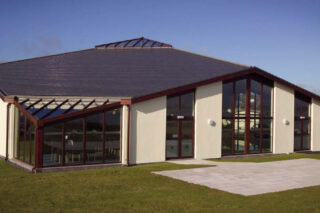
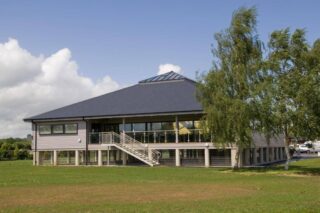
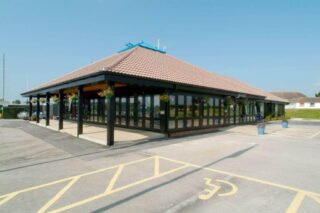
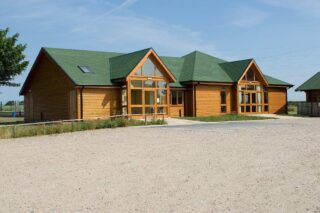
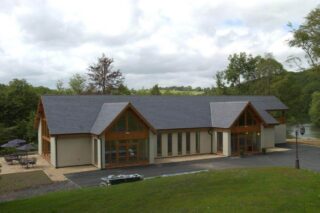
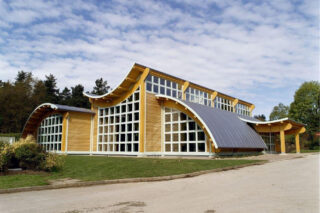
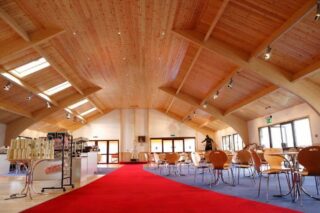
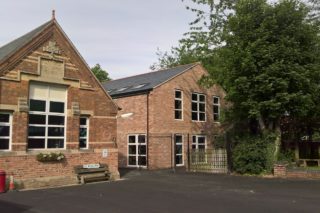
Four Winds Restaurant is constructed in timber frame, clad with rendered block work, with glulam-trussed rafters supporting the roof structure giving a vaulted style and a spacious interior. This finish, combined with the simulated slate roof match the architecture of the existing club house perfectly. Large windows along two walls and in the roof bring a light airiness to the dining area.
Phil and Steve are delighted with their new restaurant. "It has received favourable comments from all our members and is attracting diners from all over Merseyside. For £160,000 we had a superb aesthetically appealing building, which blended in with our existing clubhouse perfectly. After fitting it out, the overall cost was within our budget and we estimate that it will cost us very little to maintain," concludes Steve.
Timber is ideal for structures such as this. Ecologically sound, it has excellent thermal properties and because it is a hydroscopic material it has the ability to stabilise the moisture content of rooms. Not only is partial off-site manufacture and finishing possible, speeding up the construction process but the relative lightness of timber compared with concrete and steel also means that far less extensive foundations are necessary.